Why an arch can carry a load
Follow a load through an arch and into its supports, then use a model to investigate compression and stability.
BhoSpark team · 21 Oct,2026 · 5 min read
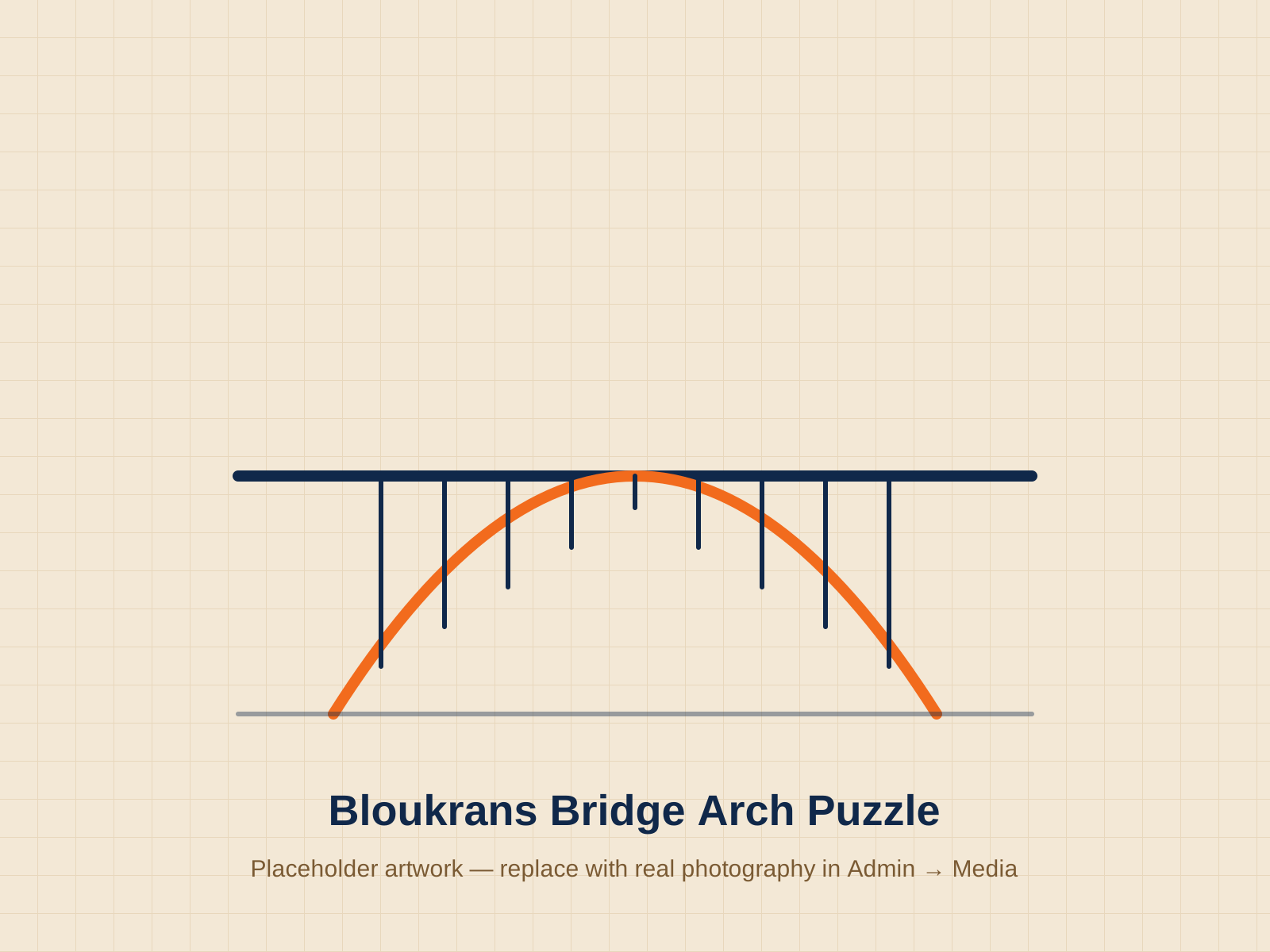
An arch carries a load by redirecting forces through its curved form and towards the supports at either side. Instead of behaving like a flat strip that bends strongly in the middle, a well-supported arch places much of its material in compression.
Compression and thrust
Compression pushes material together. As a load presses down on an arch, the force follows the curve towards the base. The arch also pushes outward, creating thrust. Strong abutments or surrounding structure are needed to resist that outward force.
If the supports move apart, the shape can lose stability. That is why an arch cannot be understood by looking only at its centre; the load path continues all the way into the supports and ground.
Why the pieces depend on one another
In a segmented arch, each piece transfers force to its neighbours. During construction, temporary support may be needed until the final shape is complete. Once the parts are correctly positioned and supported, the whole can carry load in a way that no loose piece could manage alone.
Investigate with the bridge puzzle
Assemble the bridge and observe the moment when separate pieces begin to act as one structure. Then try controlled tests:
- Press gently at different points and watch where movement begins.
- Compare a centred load with one placed nearer the side.
- Change the support spacing slightly and observe the effect.
- Sketch the route you think the force follows from the load to the base.
Use light loads only and protect the model from damage. The goal is to compare behaviour, not find the maximum load before failure.
The real bridge is a larger system
The Bloukrans Bridge crosses a deep river gorge in the Eastern Cape. Its concrete arch is only one part of the complete structure, which also includes the deck, columns, foundations and connections. A model isolates selected ideas; the real bridge combines many structural decisions.
Explain the evidence
Finish with a claim such as: ‘The arch needs firm side supports because…’ Use an observation from the model to support the claim, then identify one way the model differs from a full-scale bridge.
Build the load path
Lock the bridge into place and use the model to investigate compression, support and structural stability.